
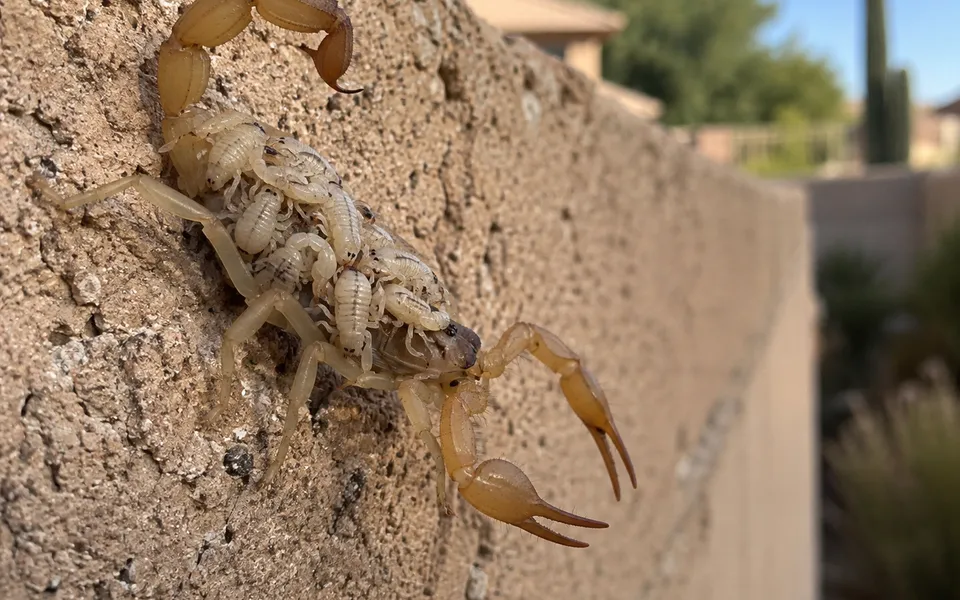
Most Arizona homeowners think about scorpions the way they think about the heat — as a summer problem. That’s mostly true, but the actual timeline is a little more specific than “hot months,” and knowing it can mean catching a scorpion problem in April instead of getting surprised by one in July.
Scorpions track temperature, not the calendar
Bark scorpions — the species responsible for the overwhelming majority of scorpion encounters around Phoenix homes — become active once nighttime temperatures consistently stay above roughly 70°F. In a typical Valley year, that shift happens sometime in March or early April, well before daytime highs feel like “scorpion season” to most people. Activity then climbs through late spring and holds through summer, with a second, smaller bump during monsoon season as humidity draws scorpions toward moisture.
By the time daytime temperatures hit the triple digits in June, scorpion activity is often already at its seasonal peak — which means waiting until summer to think about scorpion treatment means starting behind.
Why an early inspection matters
A scorpion control inspection done in March or early April, before peak activity, does two things a summer inspection can’t: it catches early activity before populations build up around a property, and it gives time to address exclusion work — sealing the gaps scorpions use to get inside — before the season most homeowners actually notice a problem.
Where activity concentrates first
Scorpions don’t spread evenly across a property as the season ramps up. Activity tends to concentrate first in the same handful of spots: block wall voids, woodpiles, landscaping rock, and any area with consistent irrigation. Desert-edge communities — the kind of newer construction common in areas like Queen Creek and San Tan Valley, where development borders undeveloped desert directly — tend to see activity ramp up earlier and more heavily than established, more central Valley suburbs.
The monsoon bump
After the early-season ramp-up, activity generally plateaus through the hottest, driest weeks of June, then picks back up once monsoon humidity arrives in July and August. Scorpions are drawn toward moisture as much as warmth, so homes with irrigation, pools, or other consistent water sources often see a second wave of activity during monsoon season even after treatment earlier in the year.
TODO(Citizen): add a closing paragraph with your specific seasonal service recommendation (e.g., spring inspection plus a monsoon-season follow-up) so this post reflects your actual scorpion program timing.