
Wasp Control
Nest removal and exclusion for the paper wasps, mud daubers, and tarantula hawks that build around Arizona patios, eaves, and desert landscaping.
How wasp control works
- 1
Locate active nests
Eaves, patio covers, attic vents, and shed corners get checked first — the handful of spots paper wasps and mud daubers build in on almost every Valley property.
- 2
Remove the nest
Active nests are treated and physically removed, not just sprayed and left in place — an empty nest left up can still attract a new colony to rebuild in the same spot.
- 3
Treat likely rebuild sites
Eaves and vents with a history of nest-building get a residual treatment to discourage wasps from re-establishing there.
- 4
Address entry points
Gaps around attic vents, soffits, and roofline penetrations get identified so wasps (and other pests) can't get behind fascia boards or into attic spaces.


Pests covered
- Paper wasps
- Mud daubers
- Tarantula hawks
Paper wasps and mud daubers build in the same handful of spots on almost every Valley property — under patio covers, along eaves, inside attic vents — which makes them predictable to find but persistent to fully clear if only the visible nest gets addressed. Citizen Pest Control’s wasp service treats and removes active nests, then targets the specific spots that tend to get rebuilt on season after season.
Why the same spots keep getting nests
Eaves and vents that have hosted a nest once tend to host one again — they offer the same shelter and structure a new colony is looking for. Removing a nest without treating the site just clears it for the season; addressing the location itself is what actually breaks the cycle.
Tarantula hawks: a different kind of wasp
Tarantula hawks are less of a structural pest and more of a yard encounter — they’re drawn to flowering desert plants rather than eaves or attics, and while their sting is famously painful, they’re not aggressive toward people. If tarantula hawk activity is concentrated around specific landscaping, treatment focuses there rather than the house itself.
Check if wasp control is available at your address
Frequently asked questions
What's the difference between paper wasps and mud daubers?
Paper wasps build the open, umbrella-shaped papery nests common under eaves and patio covers and can be defensive near the nest. Mud daubers build tube-shaped mud nests, are largely non-aggressive, and mostly hunt spiders rather than defending territory.
Are tarantula hawks dangerous?
Tarantula hawks deliver one of the most painful stings of any insect in North America, though they're not aggressive toward people and rarely sting unless directly handled or stepped on. They're drawn to flowering desert plants like milkweed rather than structures, so they're usually a yard issue rather than a nest-on-the-house issue.
Is it safe to remove a wasp nest myself?
Paper wasps will defend an active nest, and reaching a nest under an eave or roofline often means working from a ladder near the nest itself — both add risk that a professional removal avoids. TODO(Citizen): add any specific safety guidance you want published here.
Do you treat wasp nests or just remove them?
Both — active nests are treated first, then removed, and known rebuild sites get a residual treatment. TODO(Citizen): confirm whether this is a standalone service or typically bundled with general pest control.
Ready to get rid of wasps for good?
Get a free, no-obligation quote in minutes.
Related services
Bee Removal
Africanized honey bee colony removal for Arizona homes, including comb removal to prevent the honey and wax damage a nest leaves behind even after the bees are gone.
Learn more about Bee Removal →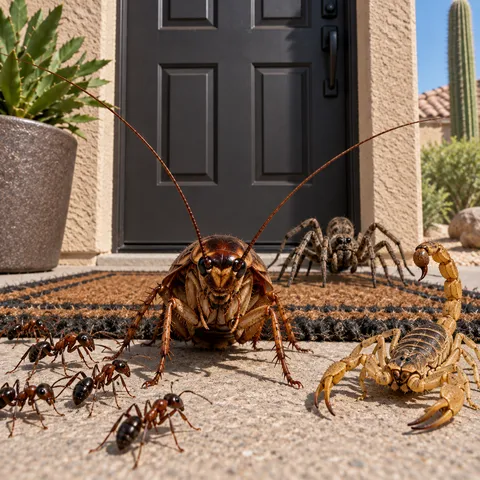
General Pest Control
Year-round protection against the everyday pests that show up in Phoenix Valley homes — ants, roaches, spiders, and the rest — with a recurring service plan built around your property.
Learn more about General Pest Control →