
Bee Removal
Africanized honey bee colony removal for Arizona homes, including comb removal to prevent the honey and wax damage a nest leaves behind even after the bees are gone.
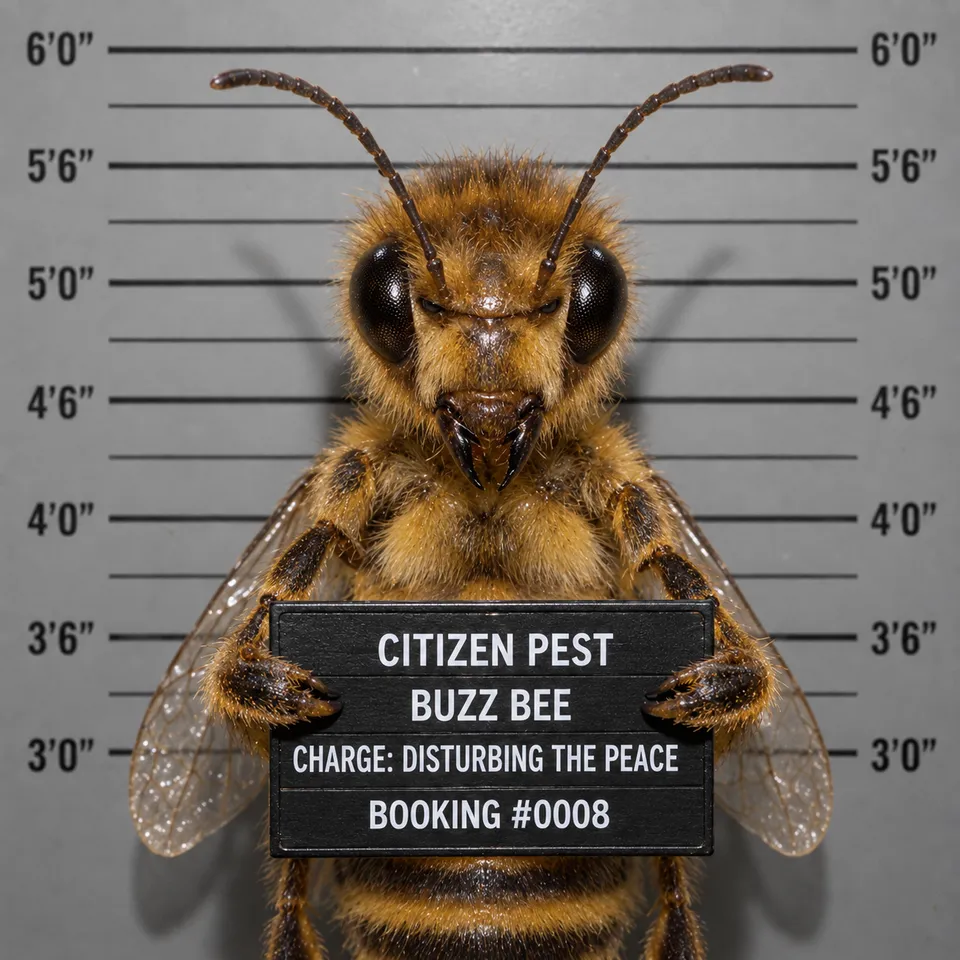
How bee removal works
- 1
Locate the colony
Wall voids, attic spaces, block wall cavities, and irrigation boxes are common nesting spots — we trace bee traffic to find exactly where the colony has established.
- 2
Assess the risk
Since the vast majority of feral honey bee colonies in the Valley are Africanized and can be considerably more defensive than non-Africanized bees, we treat every colony as potentially aggressive when planning removal.
- 3
Remove the colony and comb
The bees and the comb are removed — comb left behind in a wall void will melt, leak, and attract secondary pests (and a new swarm) even after the bees themselves are gone.
- 4
Seal the entry point
The gap the colony used to get in is sealed once removal is complete, so the same wall void or void doesn't attract a new swarm later in the season.


Pests covered
- Africanized honey bees
Most feral honey bee colonies found around Arizona homes today are Africanized — a more defensive hybrid strain that’s been established in Arizona for decades — which is why an unmanaged colony near a house, patio, or walkway is worth professional assessment rather than a wait-and-see approach. Citizen Pest Control’s bee removal service addresses both the colony and the comb it leaves behind.
Why the comb matters as much as the bees
A wall void or attic space with an established colony doesn’t just contain bees — it contains comb, honey, and wax that will melt and leak if the colony is killed but the comb is left in place. That leftover material stains, attracts secondary pests like ants and roaches, and still carries the scent that draws a new swarm looking for a home. Full removal, not just extermination, is what actually resolves the site.
Common nesting spots around Valley homes
Block wall voids, irrigation boxes, attic spaces, and gaps behind exterior fixtures are the most common places a colony establishes — often chosen for the same shelter and stable temperature that makes them attractive to scorpions and pack rats too. If you’re dealing with a colony on a desert-edge property, see scorpion control for related exclusion work, since sealing entry points helps with both.
Check if bee removal is available at your address
Frequently asked questions
Are the bees in Phoenix actually dangerous?
The overwhelming majority of feral (wild) honey bee colonies in the Phoenix area are Africanized, a hybrid strain that tends to defend a nest more aggressively and in greater numbers than European honey bees. That's why any unmanaged colony near a home is worth having professionally assessed rather than approached directly.
Why can't you just spray the bees and leave the nest?
Killing the bees without removing the comb leaves wax and honey behind in a wall or attic void, which melts, leaks, stains, and attracts ants, roaches, and other secondary pests. It also leaves the site attractive to a future swarm, since the scent of old comb draws scout bees looking for a new home.
Do you relocate bees instead of exterminating them?
TODO(Citizen): confirm whether you offer live removal/relocation in addition to extermination, since many customers specifically ask about this given bees' ecological importance.
How fast should a bee colony near my house be addressed?
TODO(Citizen): confirm your typical response time for active bee colonies, especially ones near doors, patios, or high-traffic areas of a property.
Ready to get rid of bees for good?
Get a free, no-obligation quote in minutes.
Related services
Wasp Control
Nest removal and exclusion for the paper wasps, mud daubers, and tarantula hawks that build around Arizona patios, eaves, and desert landscaping.
Learn more about Wasp Control →
General Pest Control
Year-round protection against the everyday pests that show up in Phoenix Valley homes — ants, roaches, spiders, and the rest — with a recurring service plan built around your property.
Learn more about General Pest Control →